The same OT, wherever you live.
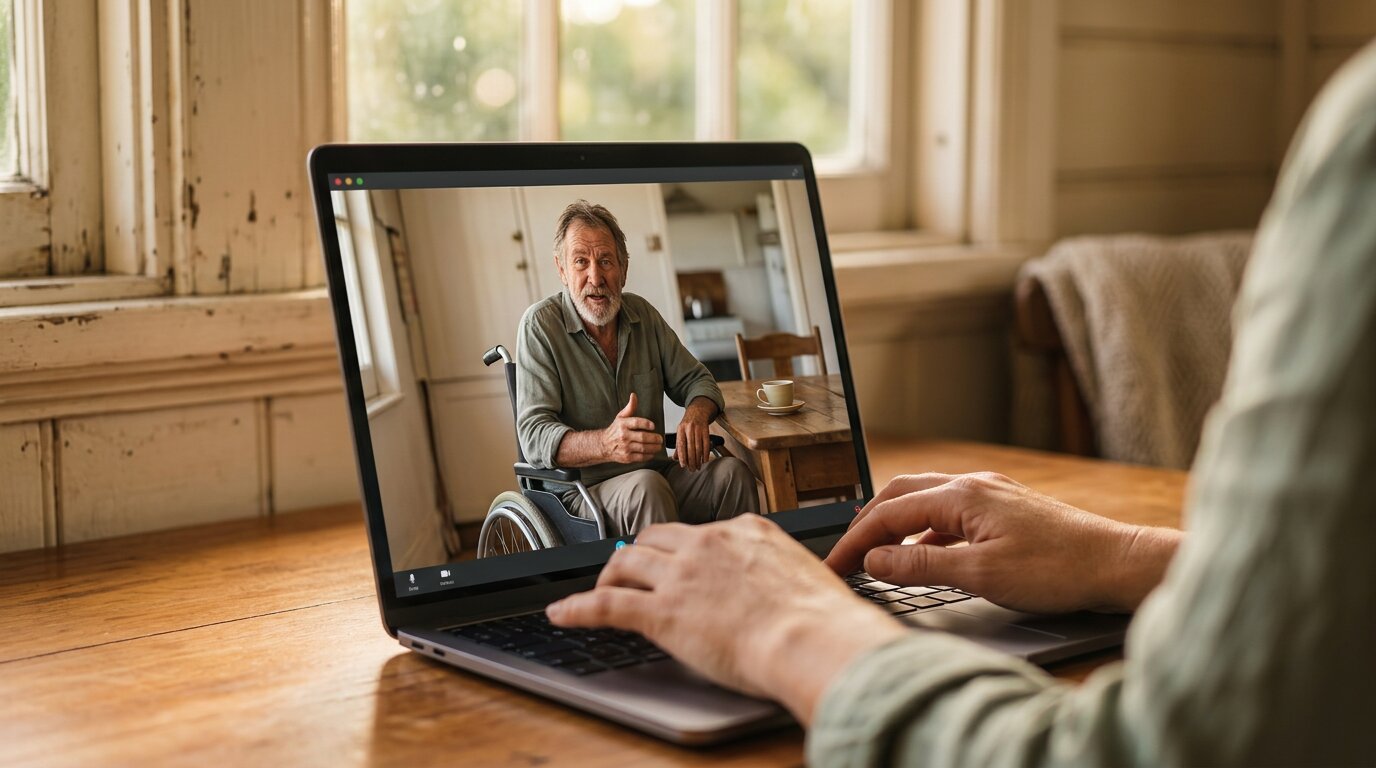
Most of our work is delivered by telehealth — a secure video call between you and your OT. The standard of care is the same. The NDIS funds it at the same rate. And it is the only realistic way for many people in rural Australia to see a specialist OT inside a year.
What works well over telehealth.
The honest answer: most of what an OT does can be delivered remotely without losing anything important. We use telehealth as the default for:
- Functional capacity assessments — including standardised assessments, history-taking, and goal-setting.
- Cognitive therapy sessions — strategies, practice, review.
- Yoga therapy — guided sessions you do in your own space.
- NDIS access request preparation — interviews, evidence gathering, report drafting.
- Most assistive technology assessments — particularly for daily-living equipment and mobility aids.
- Follow-up sessions — review of strategies, equipment trials, and progress.
When in-person is better.
Some work is better in person. We will be straight with you when this is the case:
- Home modification assessments — we need to measure, observe traffic flow, and consider the whole environment.
- Complex assistive technology assessments — particularly anything involving postural support, pressure care, or trial of large equipment.
- Some safety assessments where physical observation in the home environment is the primary need.
Across the Northern Rivers, in-person sessions are available in your home or at a local GP-shared room when established.
How a telehealth session works, step by step.
Booking confirmation
You receive an email with the date, time, and a single click link. No app installation. No download.
15 minutes before
We send a reminder. Find a quiet space with reasonable internet.
The session
You click the link. Your camera and microphone activate. We meet face to face on screen, just as we would in a clinic room.
After the session
Notes are written, exercises or strategies sent through, next session booked.
Common questions about telehealth.
What if my internet is unreliable?
Tell us. We have backup options including phone-only sessions, and we can adjust the schedule to lower-bandwidth times of day. Many of our rural clients work around imperfect internet without difficulty.
What about privacy?
We use a healthcare-grade telehealth platform with end-to-end encryption. No session is recorded. Notes are stored on a secure practice management system. Privacy meets all Australian Privacy Principles and NSW health records legislation.
Can a family member or carer be in the room with me?
Yes, with your consent. Many adults find it helpful to have a partner, adult child, or carer present, particularly for assessments where someone else helps with daily routines.
Do I need to be tech-savvy?
No. If you can answer a video call, you can do telehealth with us. We send simple step-by-step instructions and will run a five-minute test call before your first session if it would help.
Ready to try a session?
Get in touch and we can have a free 15-minute call to walk through how it would work for you.
Get in touch